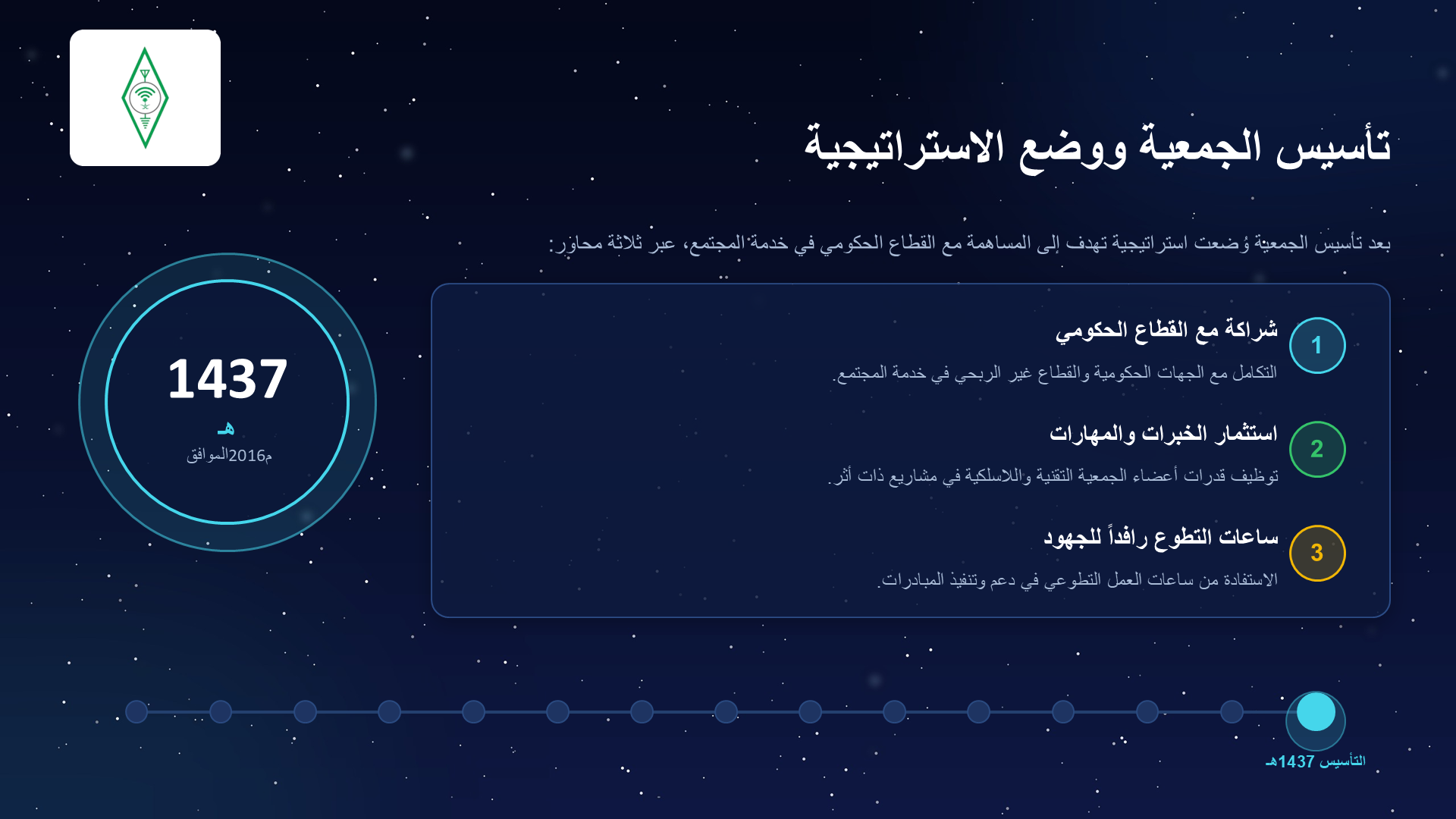
Initial Initiative
The project begins in the wider astronomy outreach and education initiative documented in the lecture.
Explore this part of the full lectureObservation / Project Log
A curated, factual record of the project's milestones. Entries summarise documented project records. Where a milestone is known only indirectly, the entry says so.
Background
The project grew from an initiative and early collaborations into telescope engineering, university deployment, scientific observations, and later integrated hardware/software work.
The project begins in the wider astronomy outreach and education initiative documented in the lecture.
Explore this part of the full lecture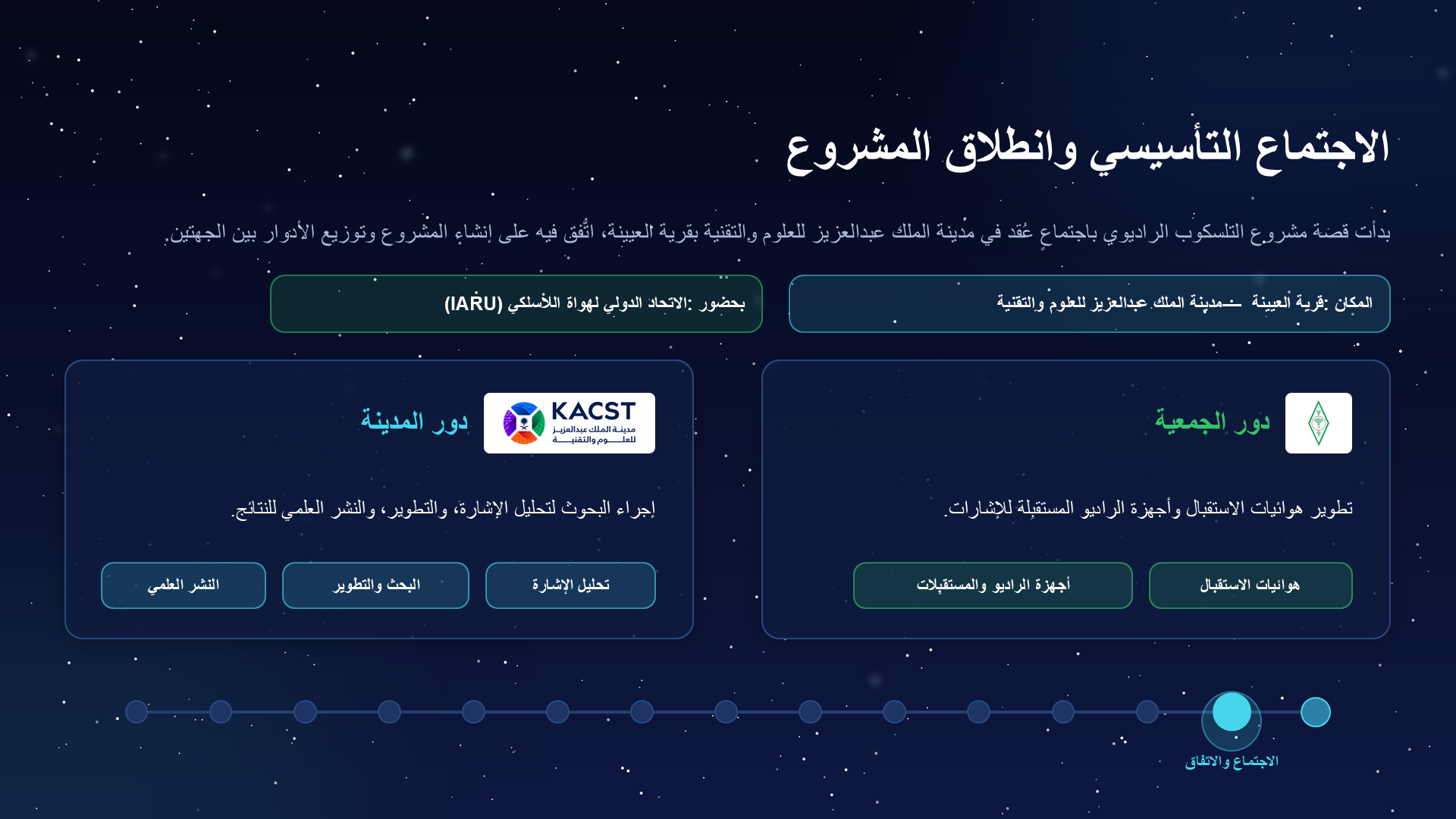
Early meetings and partner roles shaped the first practical direction for a local radio telescope effort.
Explore this part of the full lecture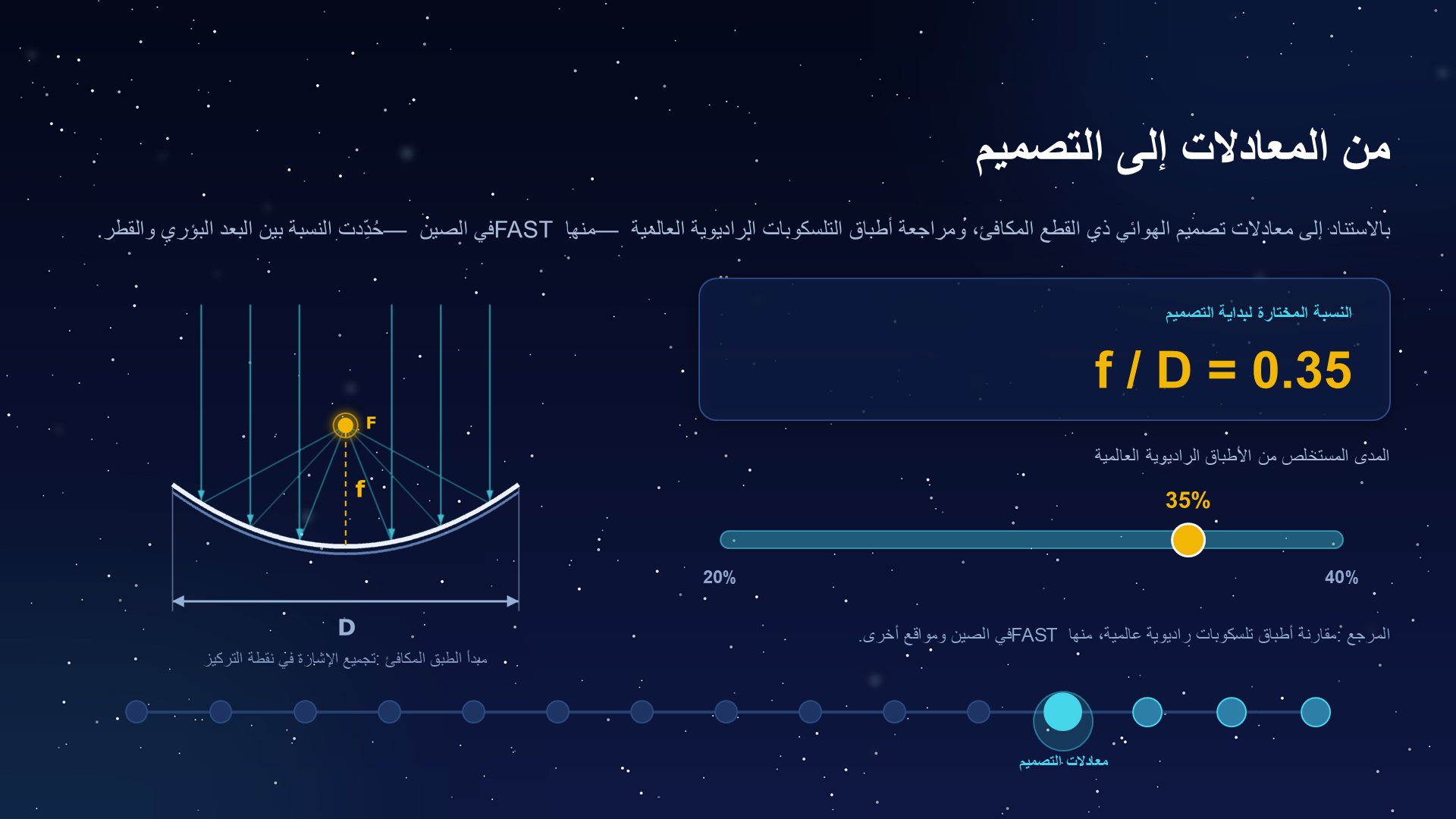
The team moved toward local parabolic-reflector design, including the engineering choice of approximately f/D = 0.35.
Explore this part of the full lecture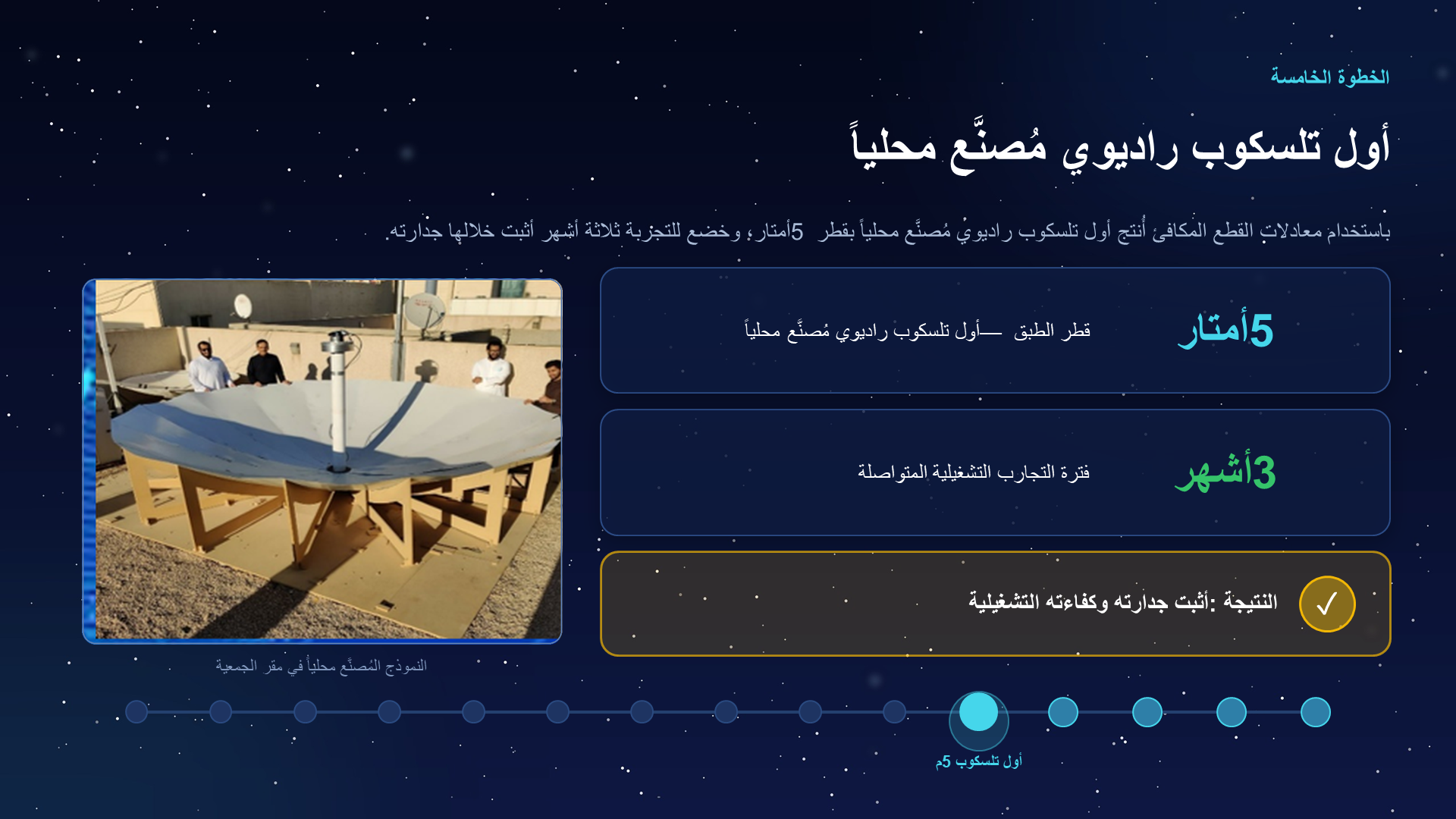
The first locally manufactured 5 m telescope became the hardware foundation for the educational radio astronomy system.
Explore this part of the full lecture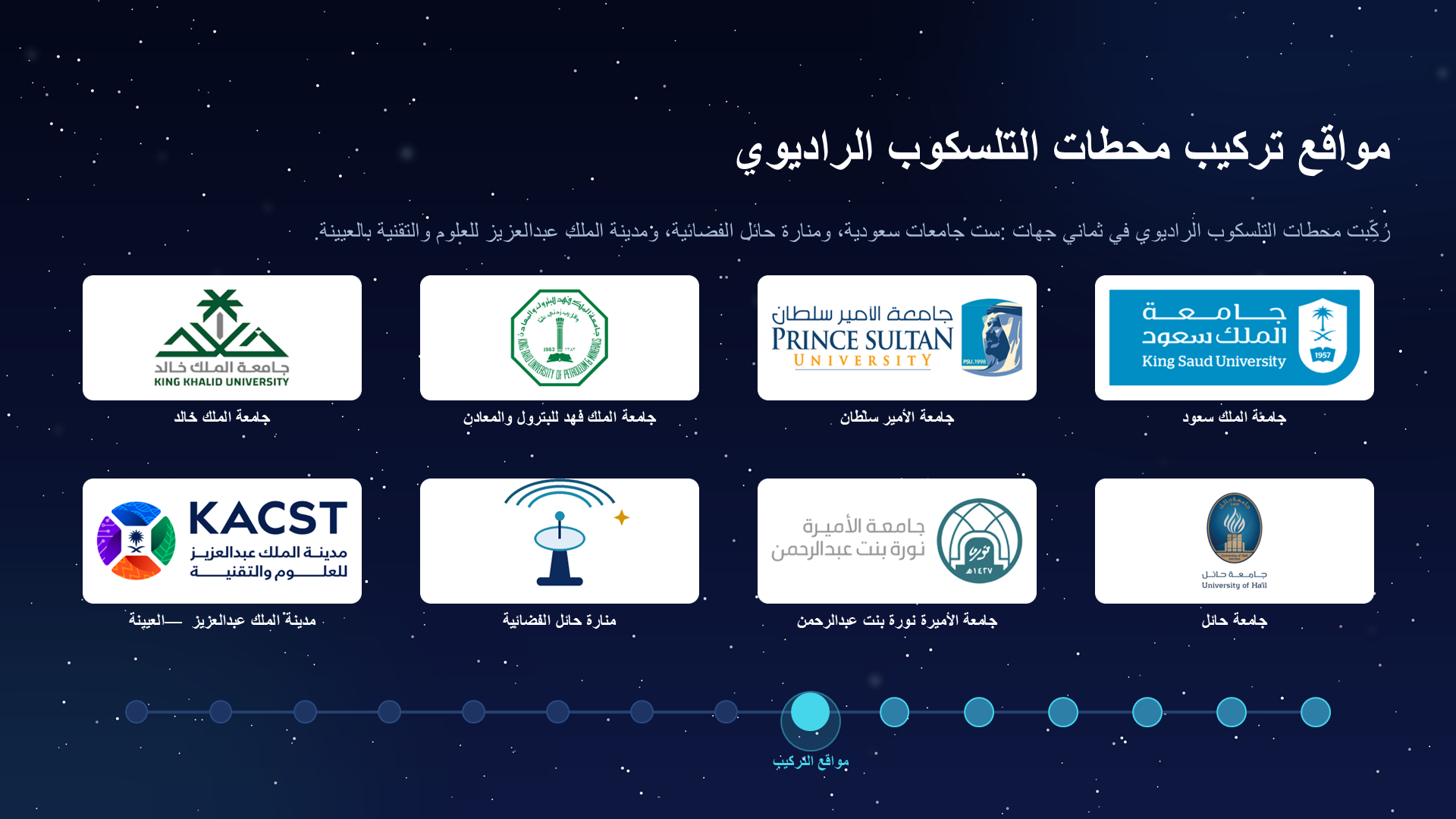
The project expanded into a university network. The 2025 IEEE paper reports replication across five Saudi universities at the published implementation stage.
Explore this part of the full lecture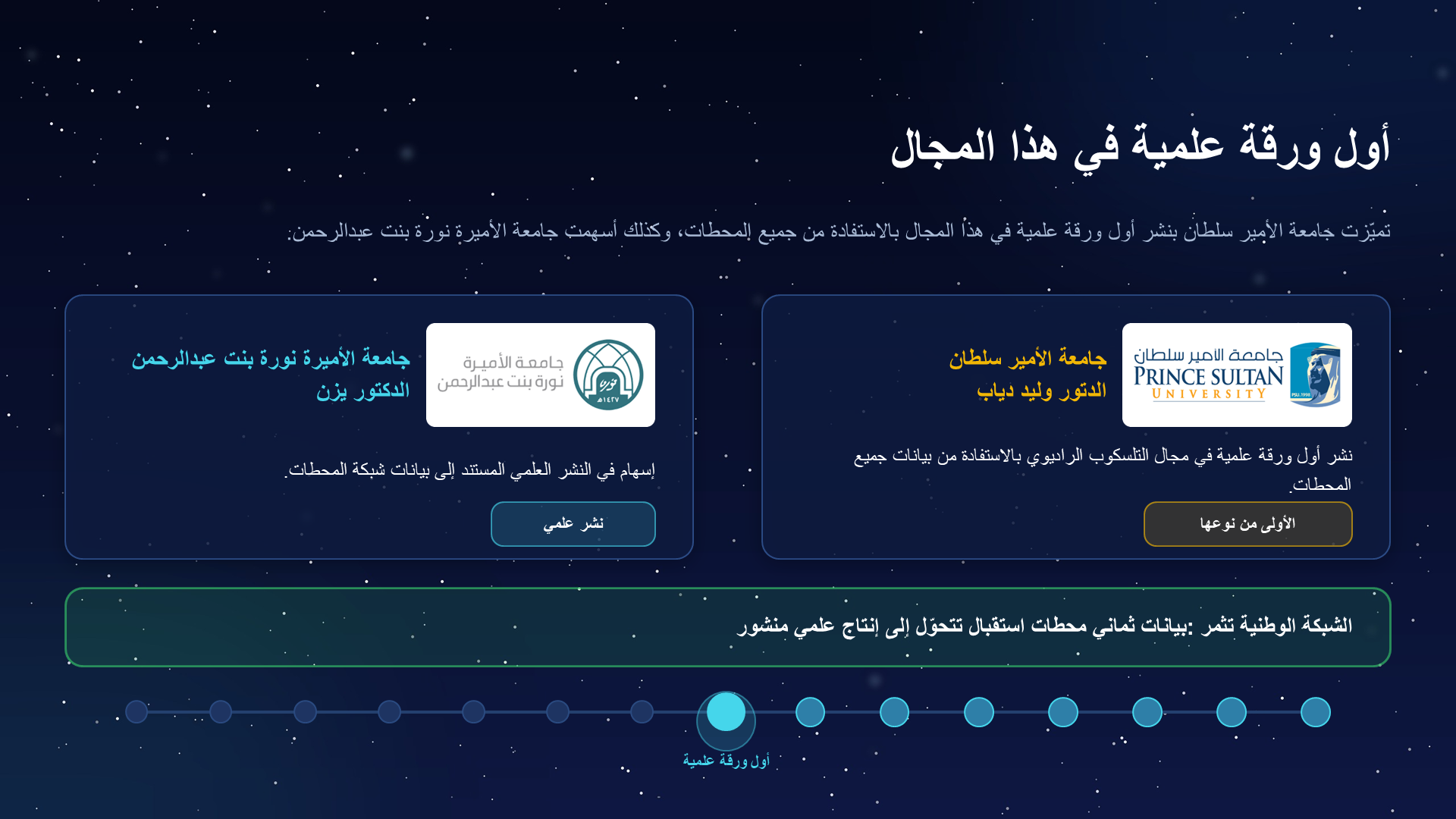
The telescope platform supported H I observations and student-facing signal analysis, moving the work from construction to science.
Explore this part of the full lecture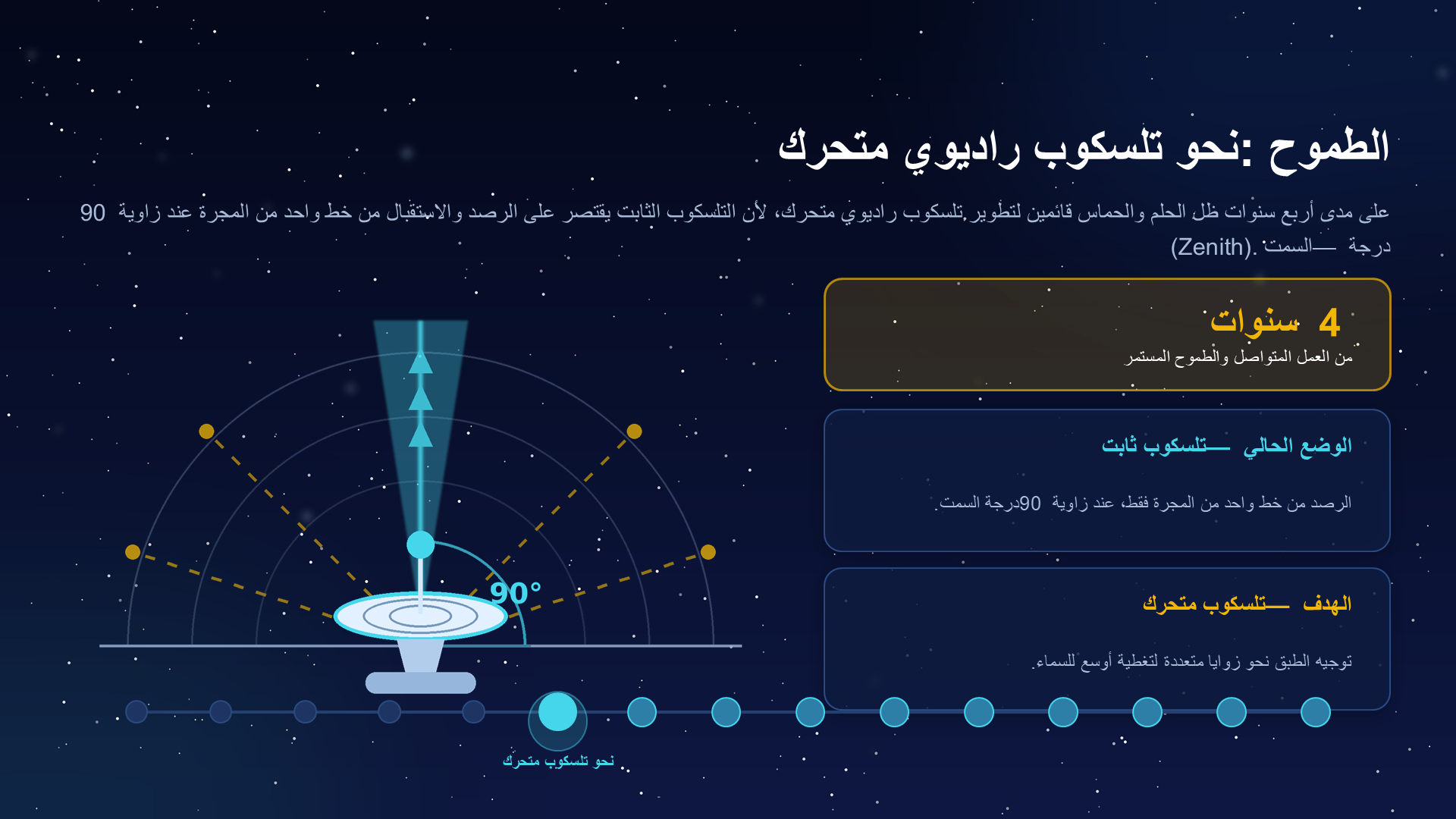
The historical fixed zenith-pointing system used Earth rotation for transit scanning, while later material motivates automated pointing.
Explore this part of the full lecture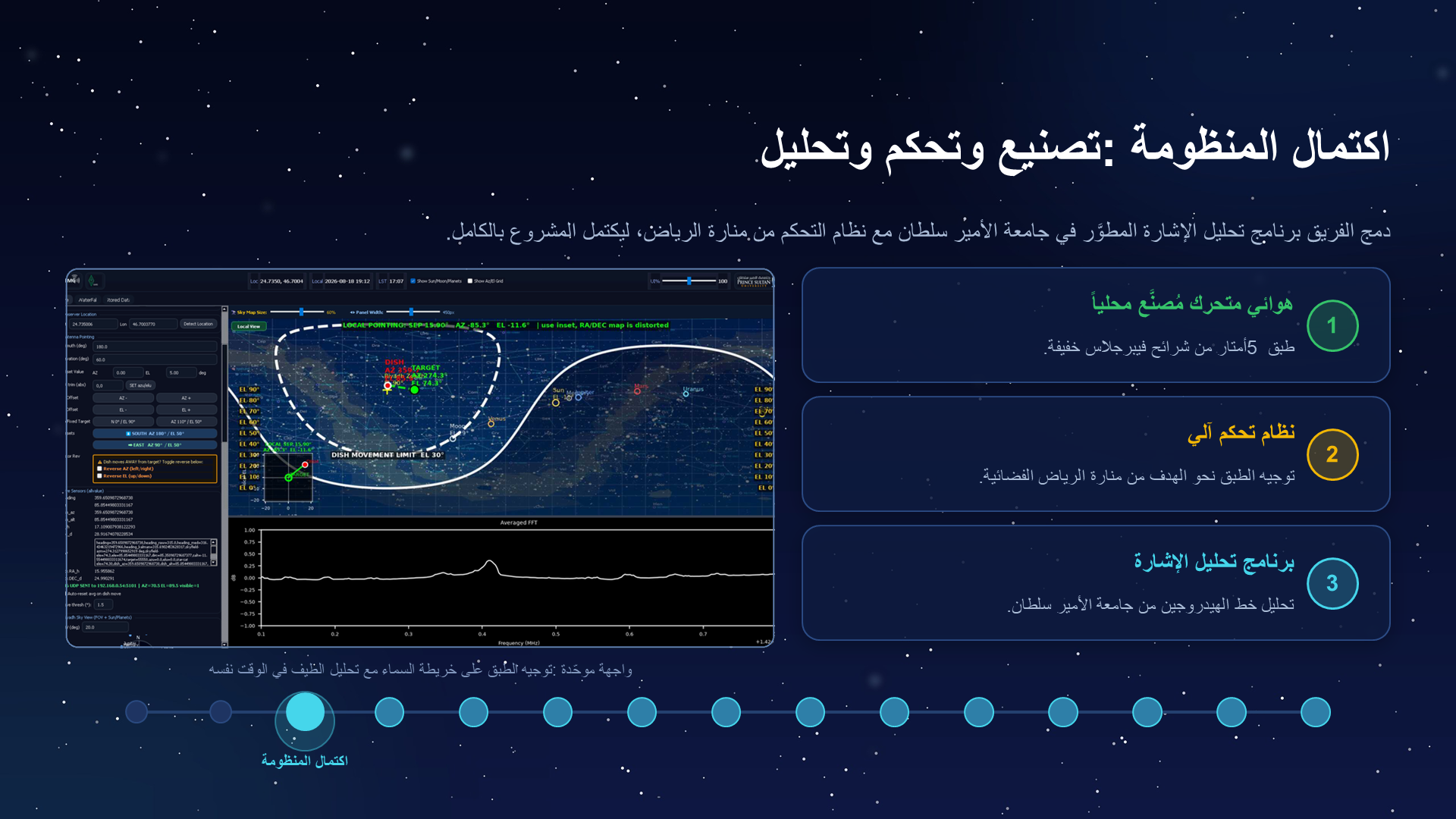
Later work connects telescope control, signal-acquisition software, calibration, and scientific visualization.
Explore this part of the full lecture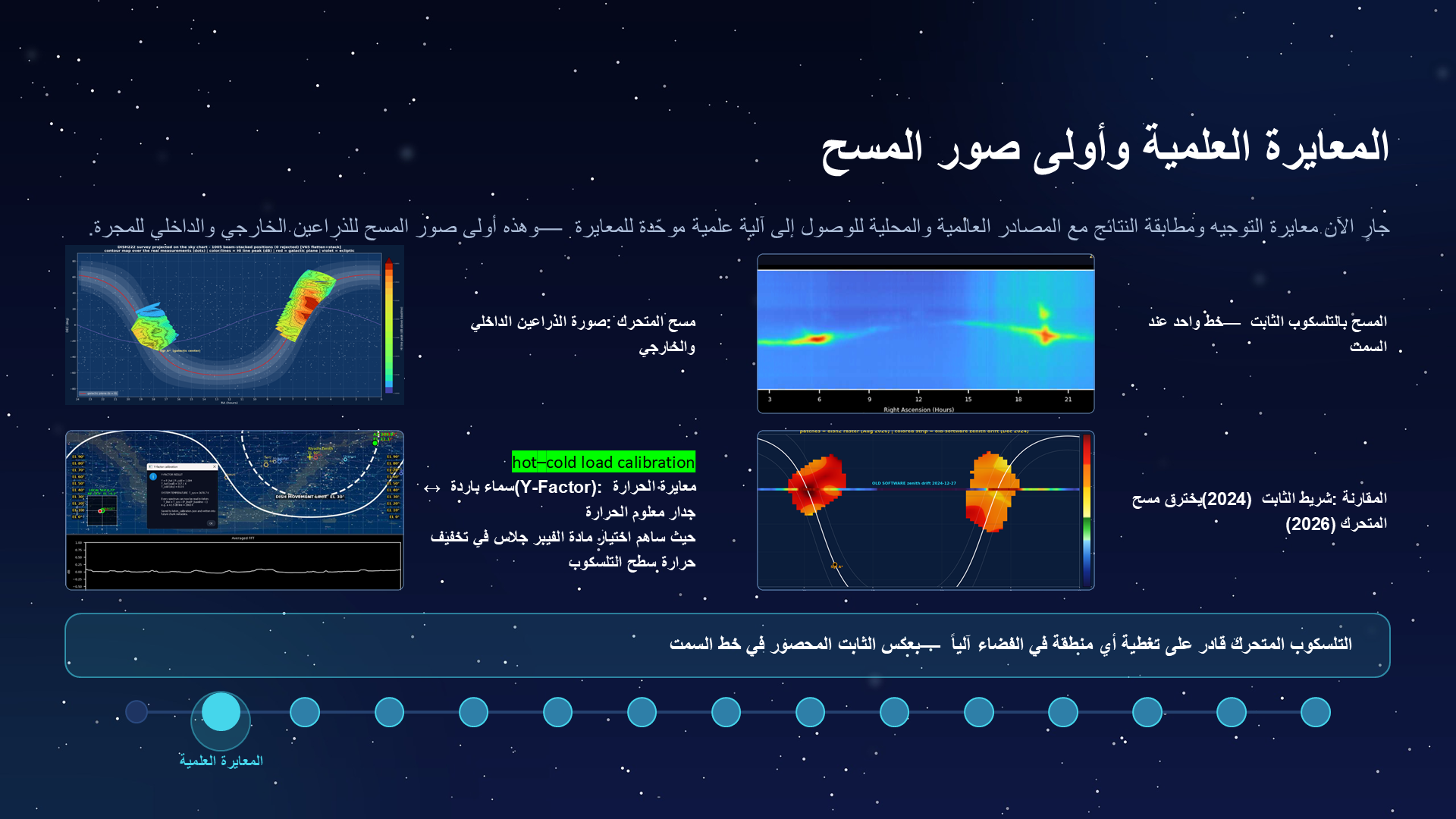
Calibration and first survey products show the transition from engineering system to measurable Milky Way observations.
Explore this part of the full lecture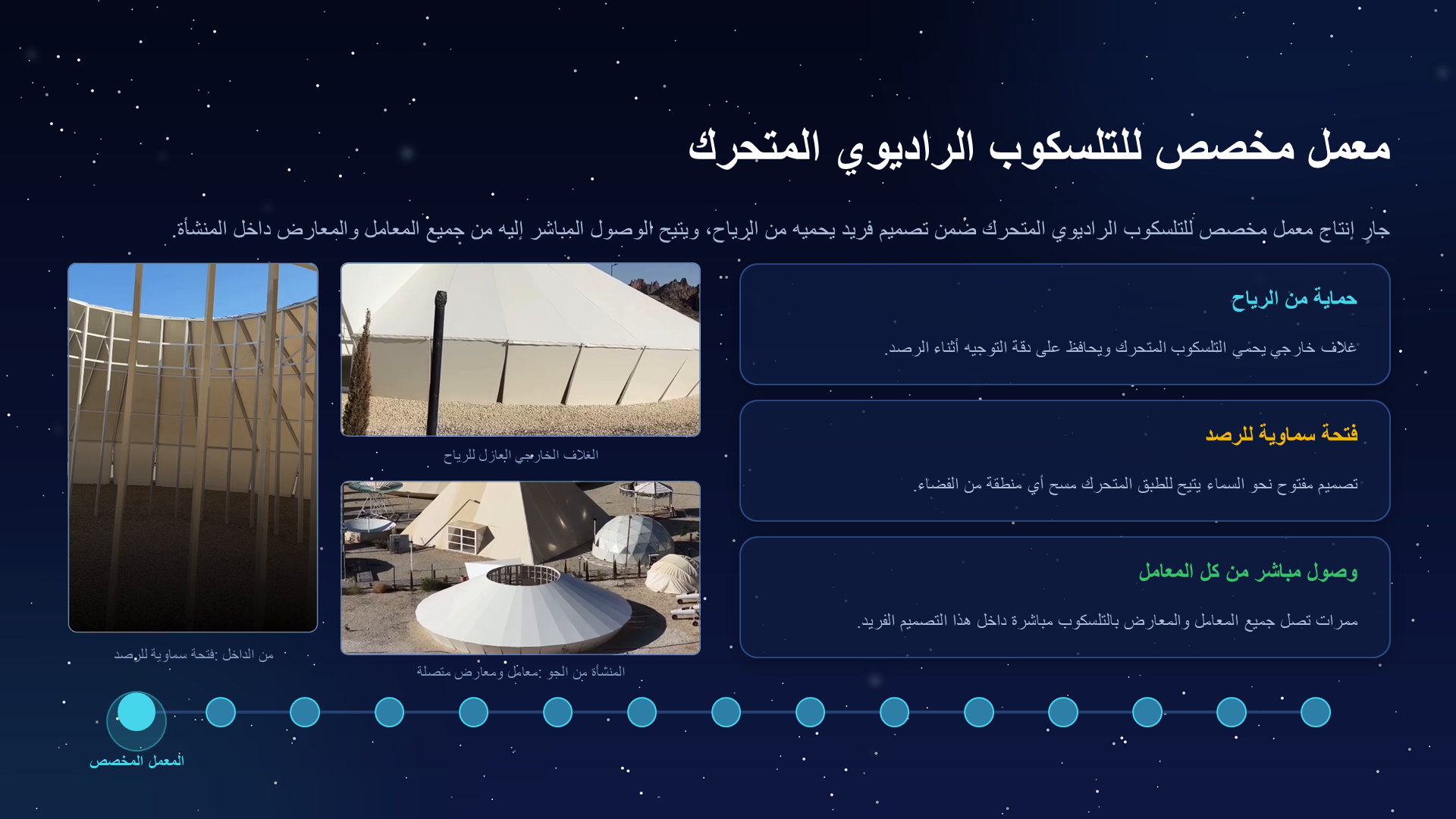
The current portal presents the complementary engineering, science, and education dimensions of the project.
Explore this part of the full lectureThe fixed, zenith-pointing 5 m educational telescope and its replication at Saudi universities are published in IEEE Antennas and Propagation Magazine. Publication
A series of Galactic survey sessions with the steerable DISH222 runs from 13 to 26 August. Only the 26 August session is in the research archive.
A strong slope across the receiver band had caused most wide spectra (75–91%) to be rejected as corrupted. Measuring the slope from each session and removing it recovered them.
Two sessions showed pointing errors of 5–10°, visibly displacing the Galactic plane. A Sun-based pointing calibration on 25 August reduced the error from 9.1° to about 1.1°.
An automated raster over Galactic longitudes 146°–226° records 776 averaged spectra at 313 positions. It is today's recommended starting dataset.
Relative dB values are converted to kelvin with a single effective system temperature of 330–480 K, anchored on the LAB survey. Epoch C1
On the relative scale, the outer-arm brightness structure follows LAB (correlation about 0.8), and the velocity–longitude pattern matches closely (r = 0.96), with the anticentre located within about 1°. The peak-velocity metric compresses the rotation amplitude by about a factor of four. Validation note
The 26 August session is delivered as a spectral cube, peak and velocity maps and a catalogue in FITS format, on the relative dB scale.
Known from the composite's session labels; its data are not in the research archive.
A scan around the inner Galactic plane. It was later re-derived in kelvin using the C2 calibration established on 2 Sep, becoming the first kelvin map. This is a historical product, not on the current C4 scale. Its comparison with LAB gives the efficiency of 0.30 used in C2. The native data are not in the archive.
A warm wall compared with the zenith sky gives a Y-factor of 4.40 dB and a system temperature of 179.5 K. Combined with η = 0.30, this becomes the C2 scale used for the early September products. Epoch C2
The observing software gains a built-in Y-factor calibration, an efficiency setting for converting antenna to brightness temperature, an automatic Sun cross-scan pointing check, and a fix that keeps each scan's pointing manifest next to its spectra.
An area scan of the Galactic-centre region yields a cube and maps on the C2 scale. The velocity field looks reasonable, but brightness comes out about 1.6 times LAB and does not fall off away from the plane, a discrepancy later addressed by the calibration work.
Morning scans on the anticentre side, plus a later session, feed the all-sky composite. Only products of the morning scans are in the archive, and they are dominated by artefacts.
Six sessions are combined, and a selection rule keeps only values between 40 and 160 K with velocities within ±35 km/s. A showcase product with incomplete native lineage. Details
Project records indicate sessions in the Cygnus region (8 Sep) and a northern area scan (13 Sep), still on the C2 scale. Their data are not in the research archive.
A concrete wall filling the beam gives a Y-factor of 1.29 dB and a system temperature of 895.4 K, still converted with the legacy η = 0.30. A solar transit on the same day gives an aperture efficiency of 0.582. Epoch C3
Later used for an independent archival check of the calibration pedestal. Not in the research archive.
Eight positions of known LAB brightness give G = 1454 K and an additive pedestal p = 0.0174. The implied efficiency of 0.616 agrees with the solar measurement. A repeat hot-load attempt that day was rejected because the load covered only about a tenth of the beam. C4 is the current reference; earlier products keep their original scales. Epoch C4
New observing-software builds add a pointing check against LAB, a continuous calibration check at the current pointing, a whole-run fit of G and p, and a beam-coverage test for hot-load measurements.
Instruments, calibration epochs and datasets are catalogued in a machine-readable registry. That registry drives the Telescopes, Data Library and Calibration pages of this portal.